
Smart Lens (Trifocal & Multifocal)

Smart Lens (Trifocal & Multifocal)
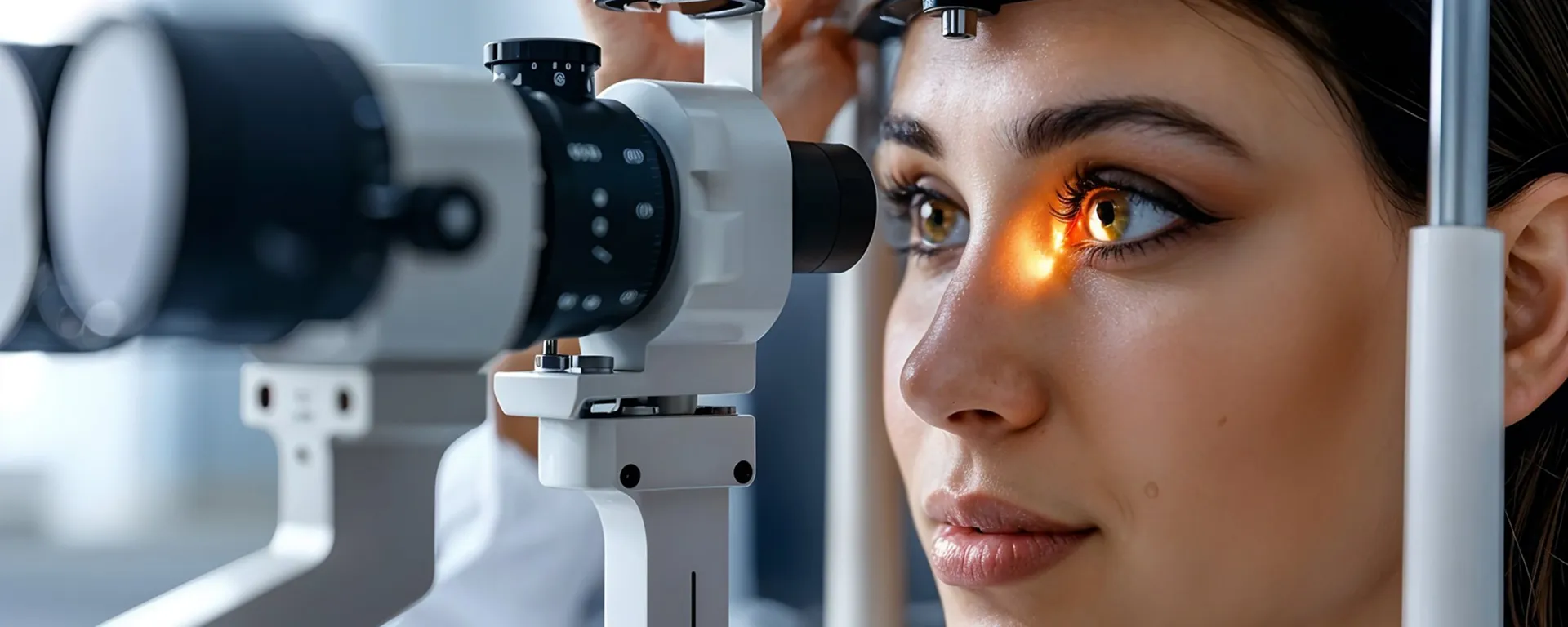
A smart intraocular lens (trifocal or multifocal lens) is a specialized lens implanted inside the eye during cataract surgery or as a refractive solution. This technology provides clear vision at far, intermediate, and near distances, significantly reducing or eliminating the need for glasses in daily life.
Our Treatment Benefits
Reduced Dependency on Glasses
Most patients achieve significantly improved independence from corrective lenses.
Long-term Solution
Unlike contact lenses, these implants are designed to last a lifetime.
Our Process
Detailed Exam
Determining corneal health and candidacy for premium lenses.
Lens Selection
Choosing the correct multifocal power for your lifestyle.
Implantation
Minimally invasive surgical placement.
Patients over 40 experiencing presbyopia, cataracts, or high refractive errors who desire reduced dependency on glasses. A thorough eye exam is required to determine lens suitability. Not suitable for patients with active macular diseases.
Typically, patients notice visual improvements within 24–48 hours. Mild light sensitivity and a gritty sensation are expected in the first few days. Full neuroadaptation to the new focal points can take a few weeks.
All surgeries carry risks. Common temporary effects include halos or glare around lights at night and dry eyes. Rare complications may involve infection, inflammation, or the need for a secondary adjustment.
Pre-op: Cease wearing soft contact lenses 3 days prior. Post-op: Use prescribed medicated eye drops rigorously. Avoid rubbing eyes, swimming, or heavy lifting for the duration specified by your doctor.
Frequently Asked Questions
Smart lenses, known as trifocal or multifocal intraocular lenses, aim to reduce dependency on glasses at far, intermediate, and near distances, especially for suitable patients with cataracts or age-related near vision problems. Although it attracts a lot of public interest, a smart lens does not suit everyone. The most accurate candidate is a patient whose cornea is healthy, retina and optic nerve are in good condition, who can tolerate night glares, and who evaluates the expectation of life without glasses realistically.
In the examination, just saying 'I want to get rid of glasses' is not enough. If there is macular degeneration, irregular astigmatism, advanced glaucoma, pronounced dry eye, or a retinal problem, a classic monofocal lens might be a more correct option. Because the success of premium lenses depends on the entire optical system of the eye being healthy. Smart lenses are most frequently considered for patients with cataracts or dealing with near vision issues after age 40. In addition, in some selected patients under the age of 40, if laser methods do not find a suitable area due to corneal structure or if the refractive error is very high, smart lens options can also be discussed after a detailed evaluation.
Prior to smart lens surgery, corneal topography, biometry, macular evaluation, and lifestyle analysis must be performed. In people who drive intensely at night, who are sensitive to halo and contrast changes, who expect very sharp contrast, or who are disturbed by minor optical defects, patient selection is made more meticulously. In such cases, more controlled optical options may come up instead of a trifocal. In the right patient, the result is extremely satisfying; in the wrong patient, dissatisfaction may develop. Therefore, smart lens selection is not considered a sales decision; it's a medical suitability decision. Even the patient's personality structure is important in smart lens planning. In a patient who is very perfectionist, over-sensitive to halos at night, or borderline in terms of retinas, safer optical options may be preferred over premium lenses. On the contrary, trifocal lenses can provide high satisfaction in patients with a suitable eye structure, an active social life, and the desire to reduce glasses dependency. The right result is obtained by performing proper candidate selection and proper expectation management together.
Presbyopia is a near vision problem that arises as a result of the eye's natural lens losing its flexibility with age. It usually starts after the age of 40. Patients present with complaints such as moving the phone away to read, difficulty with small print, and near-work fatigue in the evening hours. This process is part of natural aging; however, its management should be planned personally.
The simplest solution is reading glasses. Apart from this, progressive glasses, contact lens options, laser-based approaches in some suitable cases, and especially multifocal or trifocal lens applications performed with lens surgery can be considered. If the patient also has an accompanying cataract, smart lens planning can solve the presbyopia problem in the same surgery. The critical point here is establishing the patient's expectation realistically.
Not every method gives the same result for everyone. Night driving, computer intensity, hobbies, and profession are determining factors in the choice. Success in presbyopia treatment is not limited to just making the patient read close text; it is providing a balanced visual comfort between far, intermediate, and near distances. For this reason, near vision treatment is not considered a ready-made package; it's a personalized optical strategy. In managing presbyopia, the goal isn't just restricted to reading the newspaper; the computer screen, phone, meeting distance, and night life must be included in the equation. While some patients prioritize near vision without glasses, others want the highest contrast quality. Therefore, the treatment plan changes according to the profession. Near vision treatments that are not custom-made may look good in theory but may not produce satisfaction in practice.
Smart Lens vs Standard Lens: What is the Difference?
Standard lenses only focus at one distance (usually far), while Smart Lenses provide vision at all distances without glasses.
2026 Smart Lens Surgery Costs
Smart lens pricing is determined by the brand of the lens (Zeiss, Alcon, etc.) and specific technical features like astigmatism correction.
Factors Affecting the Cost
- Lens Brand & Origin (Zeiss/Alcon)
- Astigmatism Correction (Toric Lens Necessity)
- Surgical Team Expertise
- Quality of Medical Consumables Used


Experience Premium
Eye Care Today
Take the first step towards clearer vision. Select a convenient date and time for your consultation with our specialist team.
Book Your Consultation
Choose a convenient time for your assessment with Dr. Söyük.