
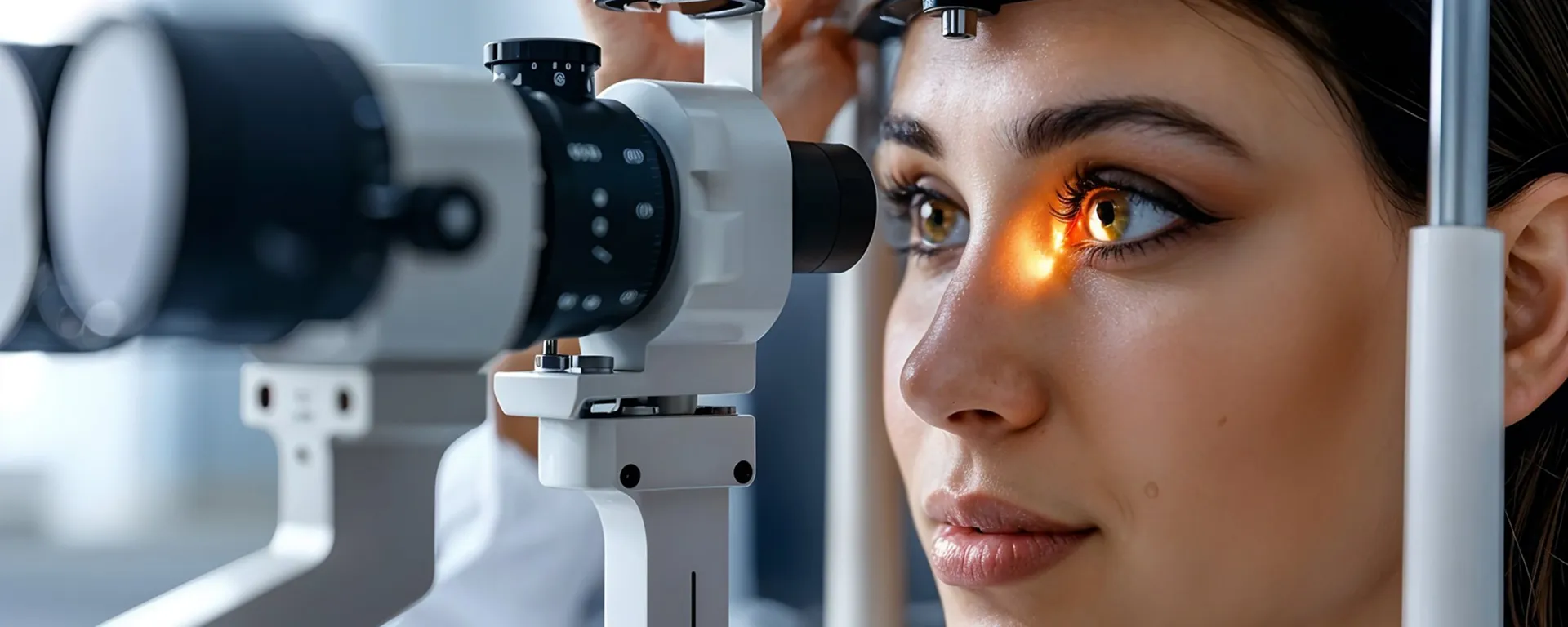
Amblyopia & Strabismus Surgery

Amblyopia & Strabismus Surgery
Amblyopia (Lazy Eye) and Strabismus (Squint) are conditions where the eyes don't focus properly together. Common in childhood, early diagnosis is essential. Treatment ranges from patching and glasses to specialized muscle surgery.
Our Treatment Benefits
Binocular Vision
Enabling both eyes to work together for depth perception.
Developmental Support
Preventing vision issues from impacting education.
Our Process
Sensory Check
Assessing how the brain processes images from both eyes.
Prism Testing
Calculating the exact degree of misalignment.
Correction
Non-surgical or surgical realigning of eye muscles.
Suitable for adult or pediatric patients suffering from persistent misalignment of the visual axes. Surgical candidacy is highly individualized and depends strictly on the measured degree of deviation and the outcomes of previous non-surgical attempts like patching.
Post-operative redness, eye tearing, and mild discomfort are generally expected. Because the ocular muscles are adjusted, the neurological pathways may require several weeks to fully adapt to the new visual alignment.
There is an occasional need for subsequent surgical adjustments if the initial deviation is not fully neutralized. While the procedure is standard, general surgical risks such as infection and persistent double vision are theoretically possible, though very rare.
Meticulous use of prescribed antibiotic and steroidal eye drops must be maintained. Patients are instructed to strictly avoid swimming, dusty environments, and direct eye contact with water until full clearance is provided.
Frequently Asked Questions
Strabismus in children shouldn't be seen purely as an aesthetic misalignment; underlying causes might involve lazy eye, high refractive errors, congenital cataracts, or divergent neurological reasons. Therefore, if inward or outward turning of the eyes, head tilting, closing one eye, or struggling while focusing on a point is observed, there shouldn't be a wait. The most frequent error families make is thinking 'they will grow out of it'.
In truth, the initial years represent a critical period for view development. Unnoticed strabismus or refractive errors in this timeframe can cause the brain to suppress the image from one eye, paving the path to amblyopia (lazy eye). The later lazy eye is discovered, the slimmer the chances of treatment. Tending to lazy eye prior to transitioning past ages 7-8 significantly cranks up the chance of success; in far older ages, the journey turns progressively challenging. Through examination; refractive errors, eye movements, squint angles, and both eyes' view potentials are assessed.
The therapy can be outlined in the form of glasses, patching, orthoptic approaches, or surgery. The objective here isn't locked down just to presenting the eyes as straight; it's shielding the joint operational capability of both eyes as much as possible. With pediatric eye health, early diagnosis genuinely crafts destiny. Particularly if there exists a history of strabismus within the family, premature birth, or developmental risks, exams shouldn't be prolonged any further. At pediatric eye screenings, the objective goes far beyond merely seeing if an eye looks straight or not. The potential for the two eyes to merge operation, depth awareness, prescription divergences, and lazy eye risks are simultaneously considered. Getting started on glasses or a patching routine early can preclude dramatically graver losses further down the line. That's why, even if an alignment issue is intermittent, or even just noticed in photographs, getting examined shouldn't be delayed.


Experience Premium
Eye Care Today
Take the first step towards clearer vision. Select a convenient date and time for your consultation with our specialist team.
Book Your Consultation
Choose a convenient time for your assessment with Dr. Söyük.